Manual DOT entry
Technicians transposed DOT/TIN codes by hand—often in dim bays with raised markings— and legacy flows offered no validation to catch mistakes.
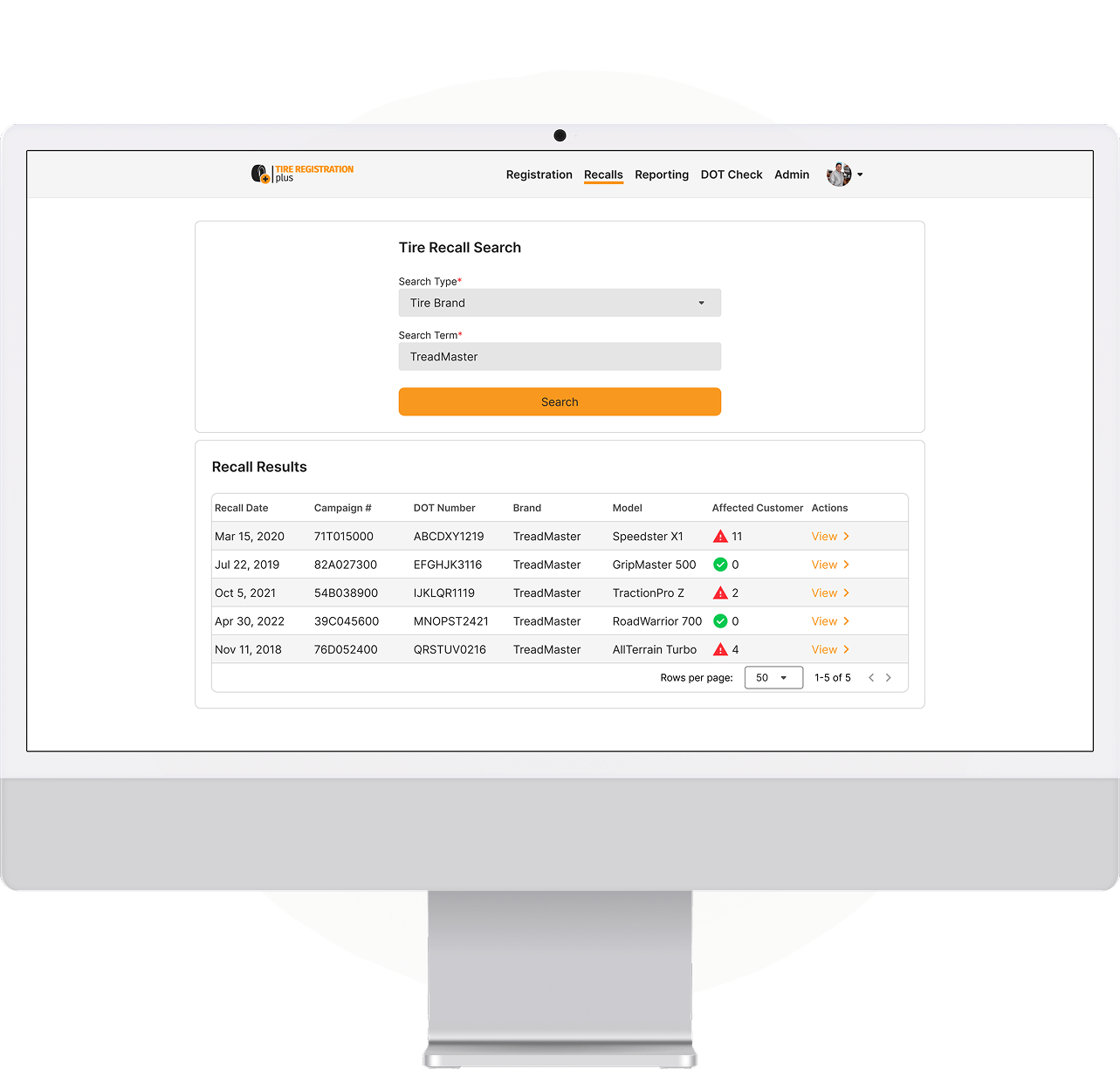
NHTSA‑compliant electronic tire registration for modern tire retailers and repair shops.
Tire Registration Plus is an all-brand electronic tire registration platform that helps retailers and repair shops comply with the FAST Act. I served as the sole designer and product manager, leading the product from concept → launch, integrating with POS systems, and building recall monitoring.
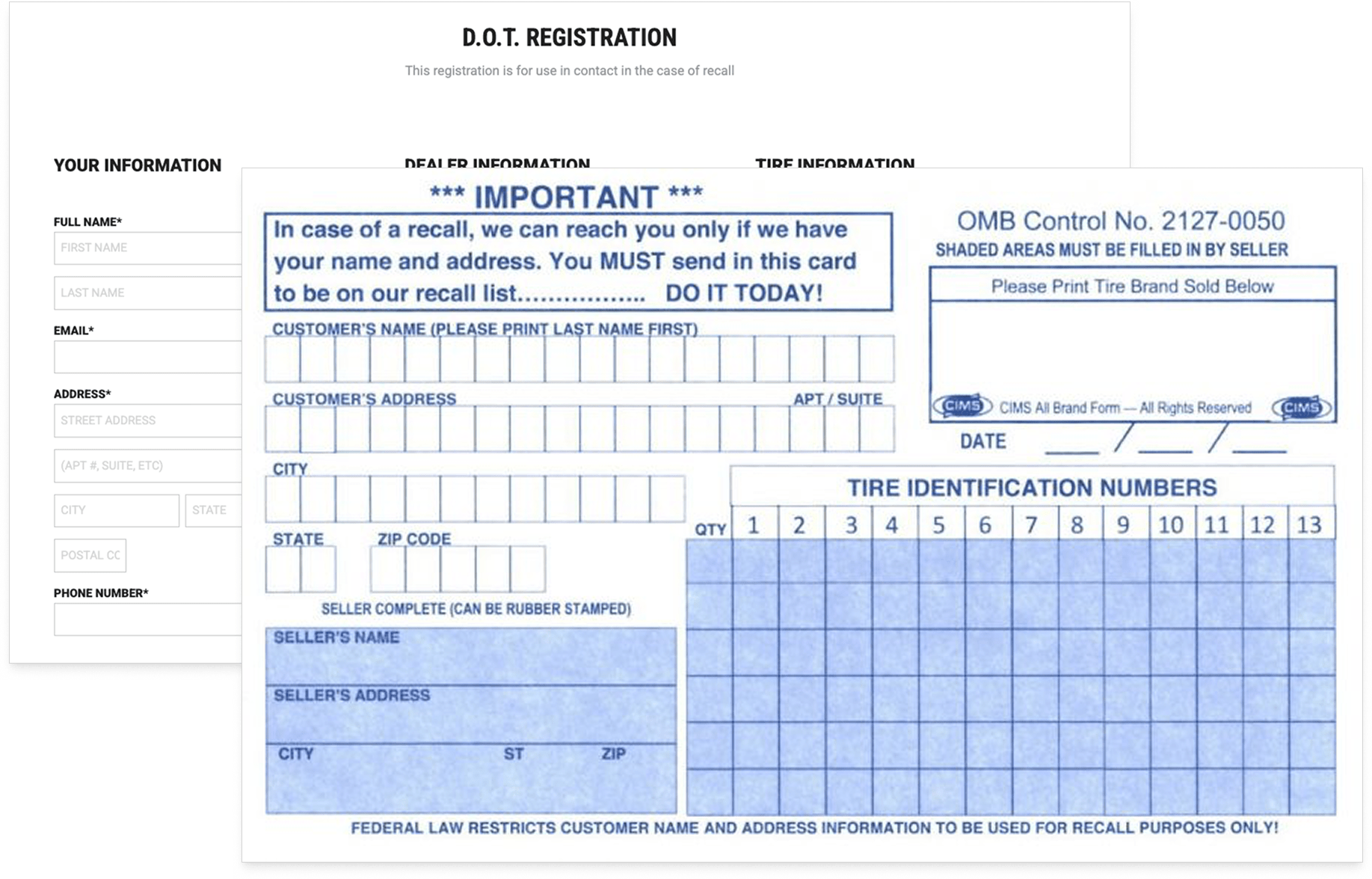
After the FAST Act increased penalties for failing to register tires at the point of sale, the industry was still relying on paper postcards and manufacturer websites. Both approaches had major shortcomings:
Tire retailers needed a single, all-brand solution with validation, oversight, and recall readiness.
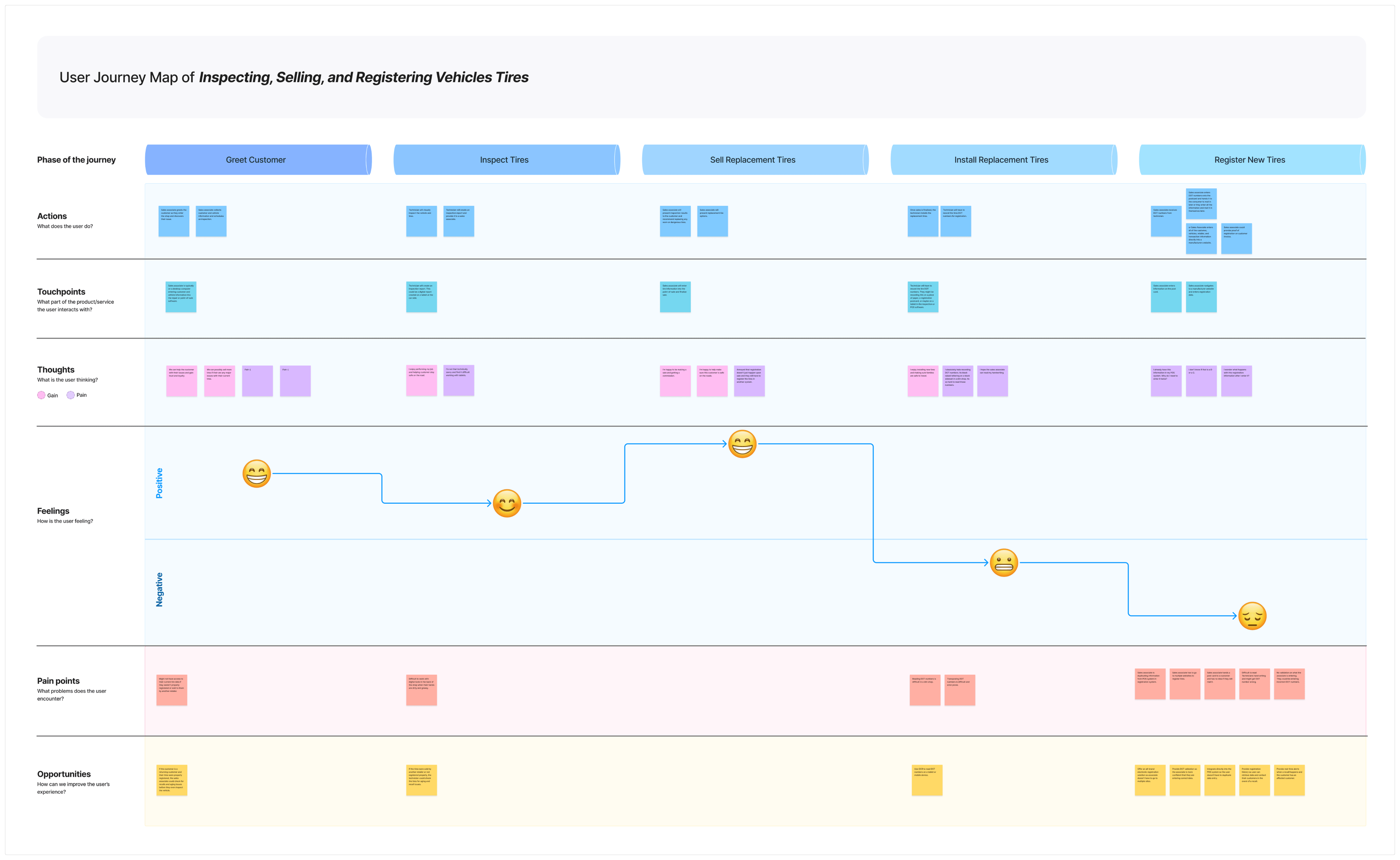
We conducted shadowing sessions inside local tire shops—most notably with Belle Tire, where we had full access to technicians and workflows. Seeing the work first‑hand surfaced the core problems we needed to solve.
Technicians transposed DOT/TIN codes by hand—often in dim bays with raised markings— and legacy flows offered no validation to catch mistakes.
Customer and vehicle data already in the POS had to be re‑entered into postcards or manufacturer sites, slowing counter workflows.
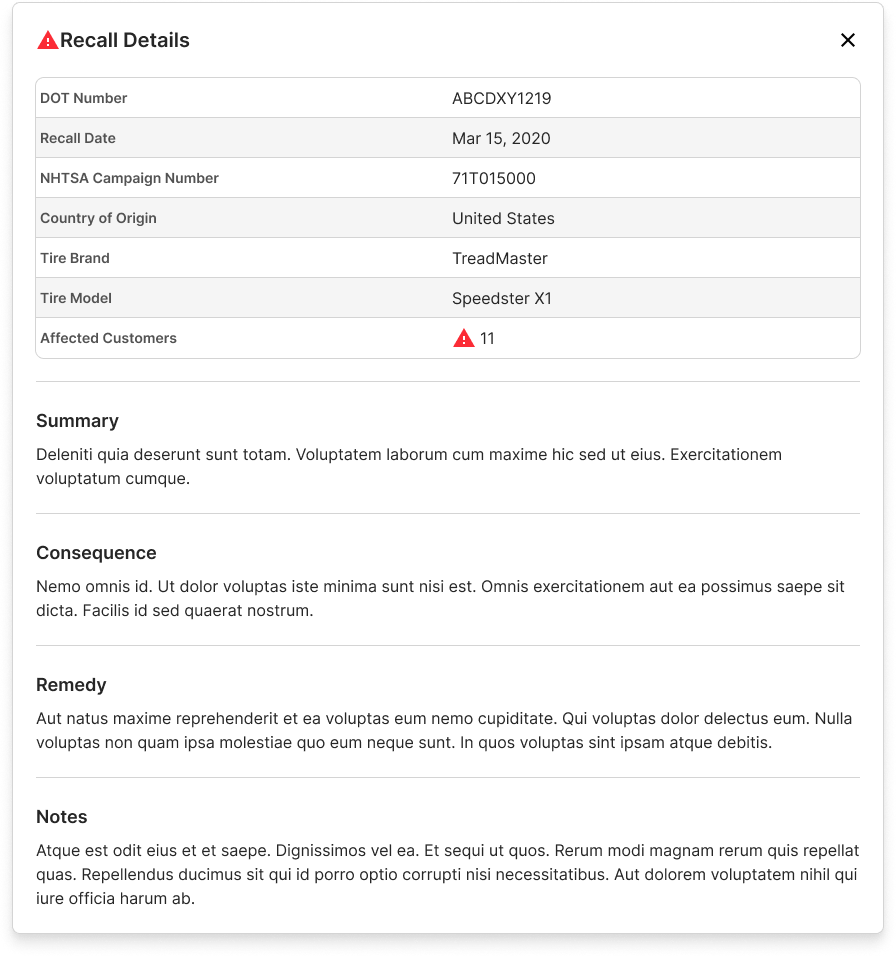
Shops couldn’t check recalled tires in real time or contact affected customers—creating safety risk and potential fines.
These observations shaped our design goal: build a platform that is fast, accurate, and proactive. It needed to meet shops where they already work while adding oversight and recall readiness.
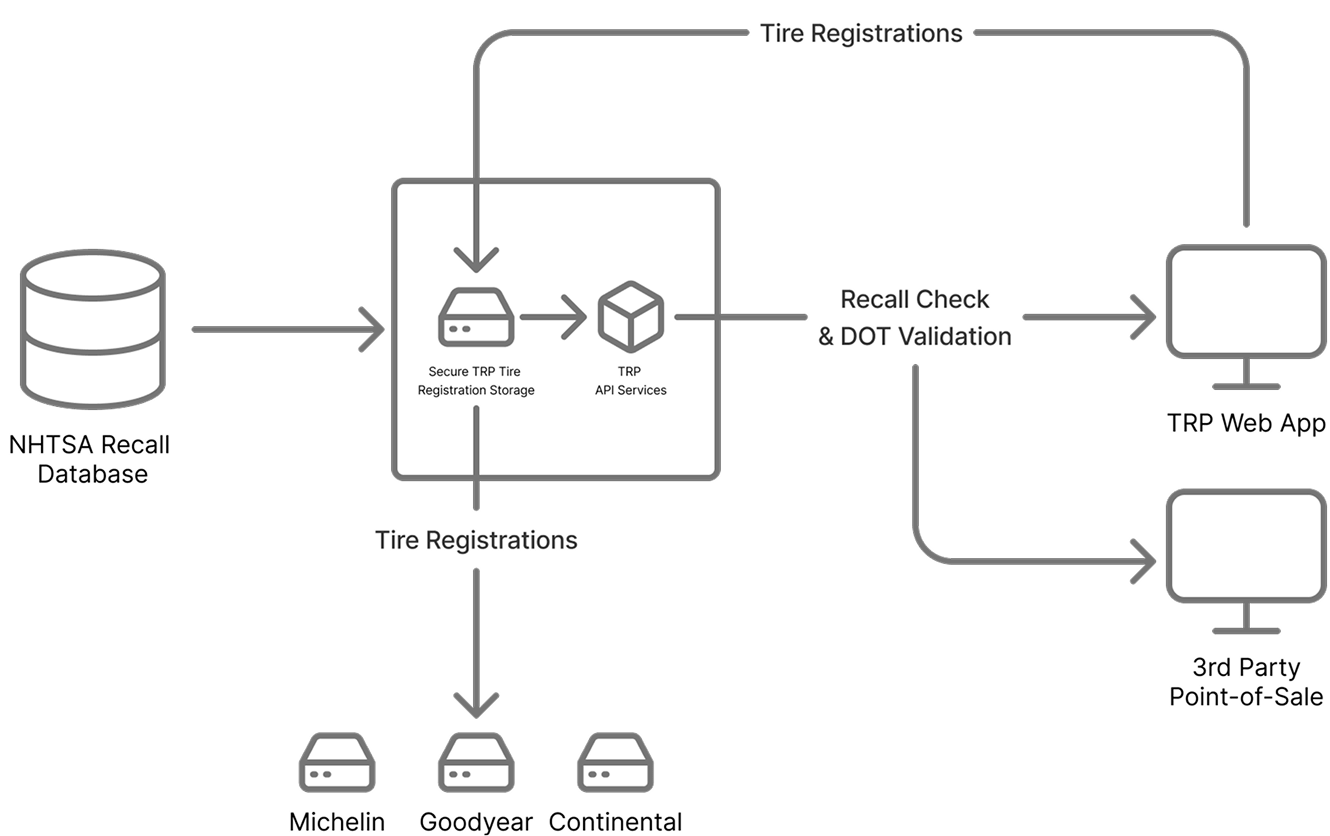
The TRP cloud platform served as the single source of truth for all registrations. It exposed DOT/TIN Validation and Recall Check APIs to both the web app and partner POS systems. Registrations were stored centrally and automatically transmitted to manufacturers, ensuring compliance, data accuracy, and recall readiness at scale.
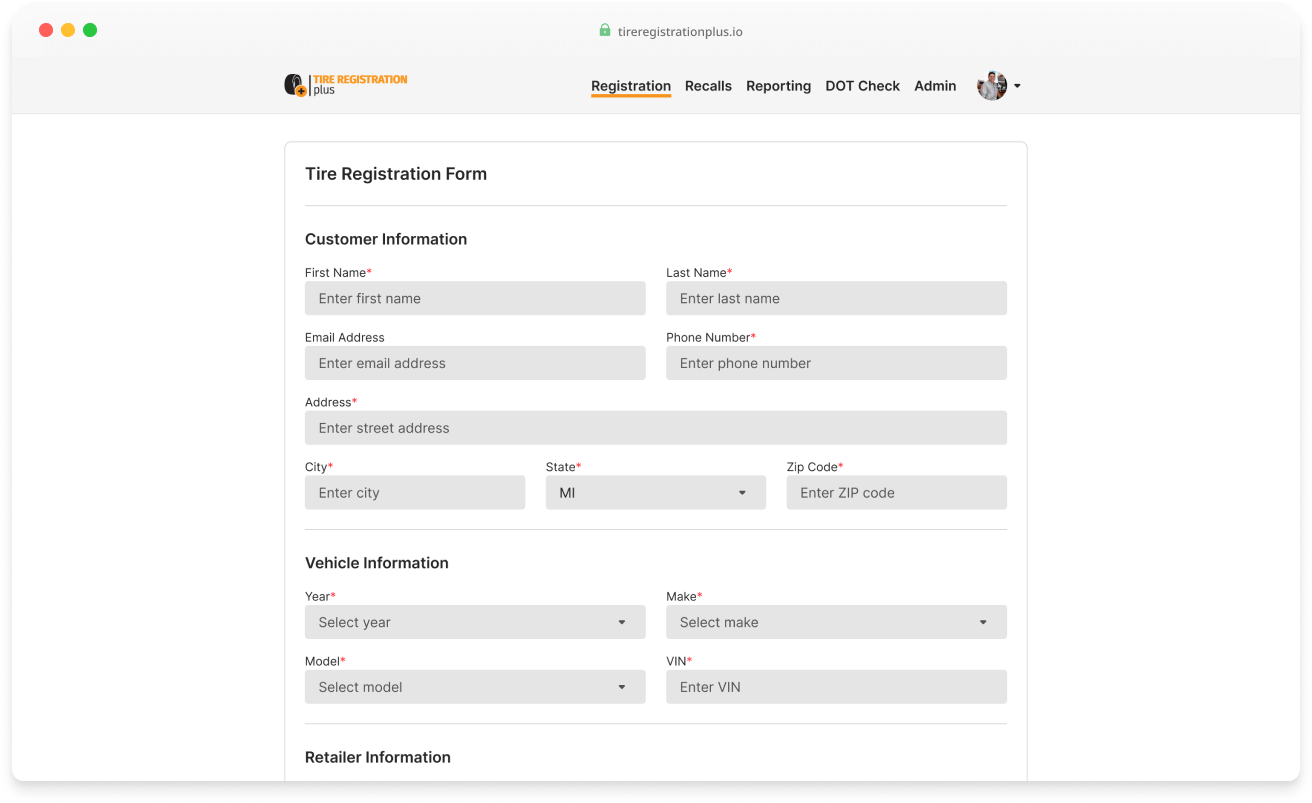
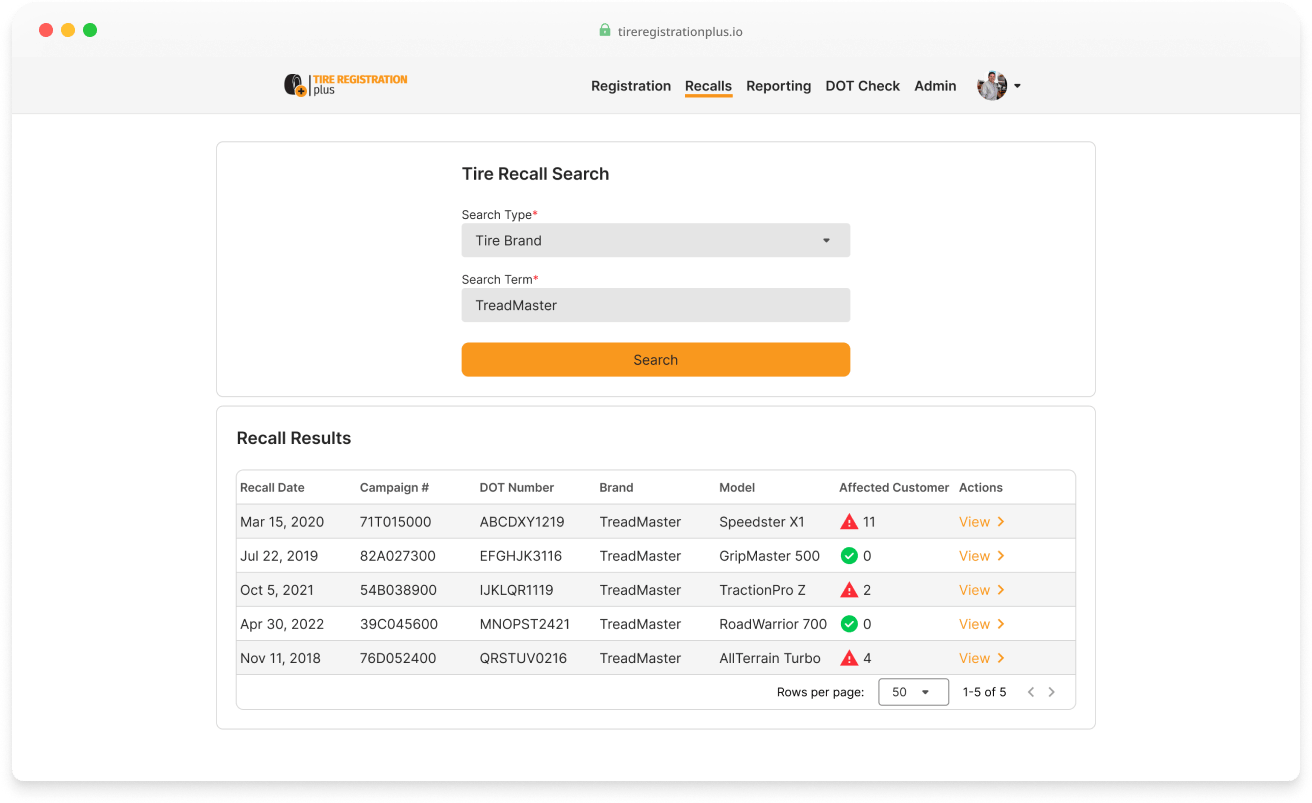
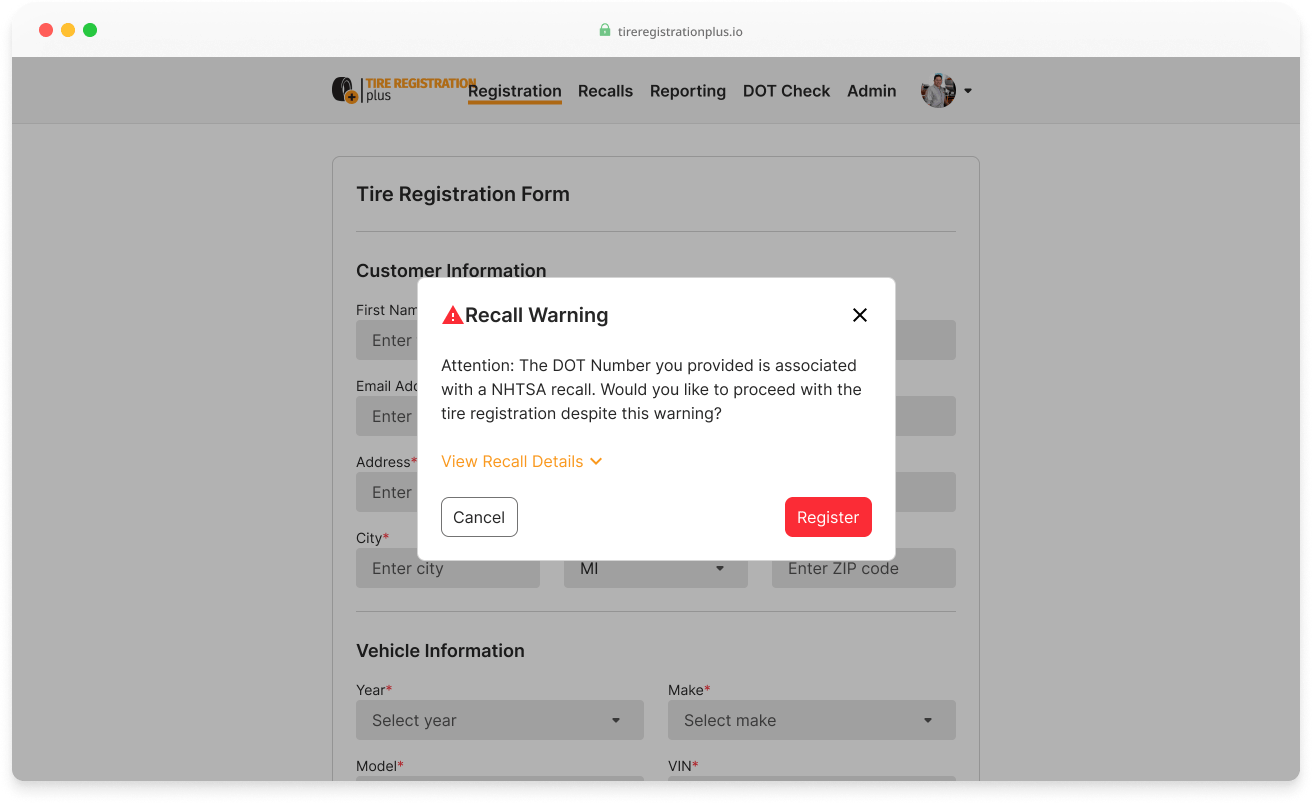
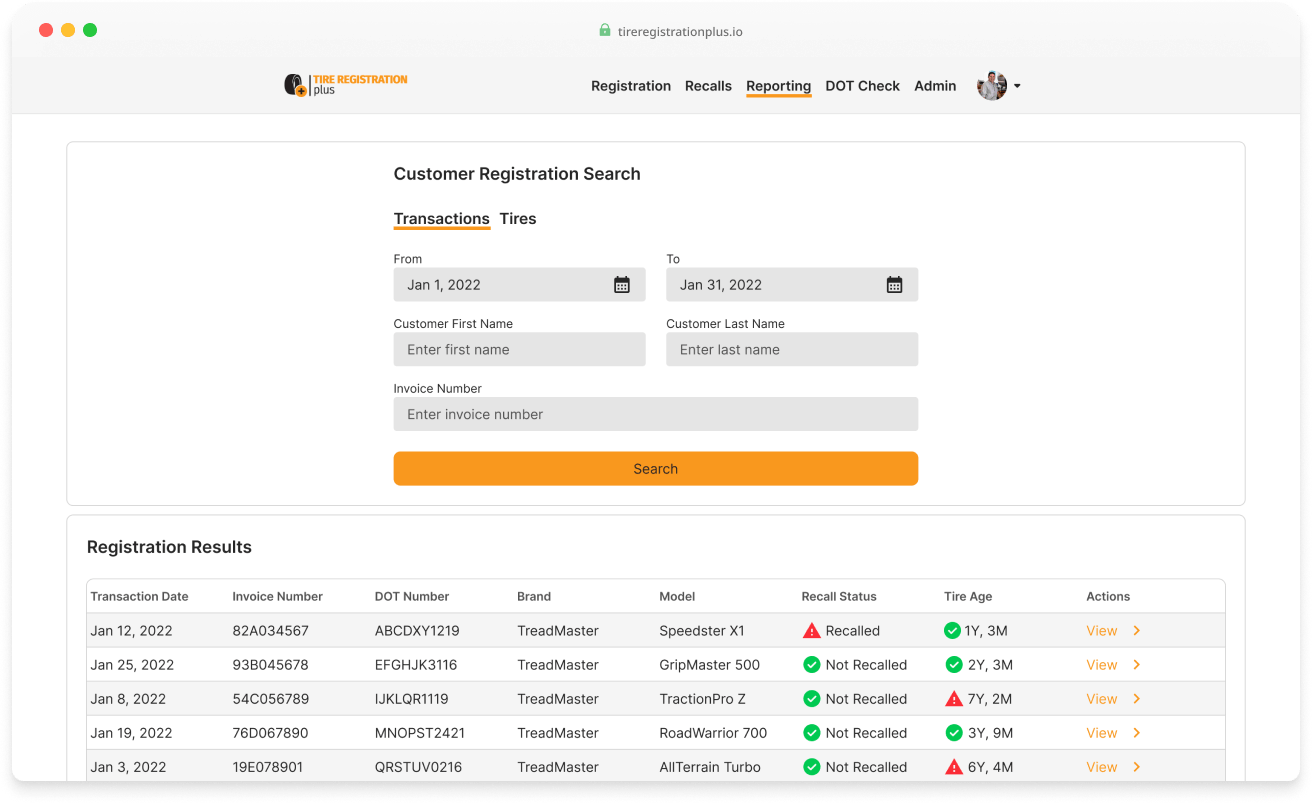
We translated research insights into four core capabilities—built once in the TRP cloud and delivered consistently across the web app and POS integrations.
Tech: Registration stored centrally; exports/reporting for manufacturers.
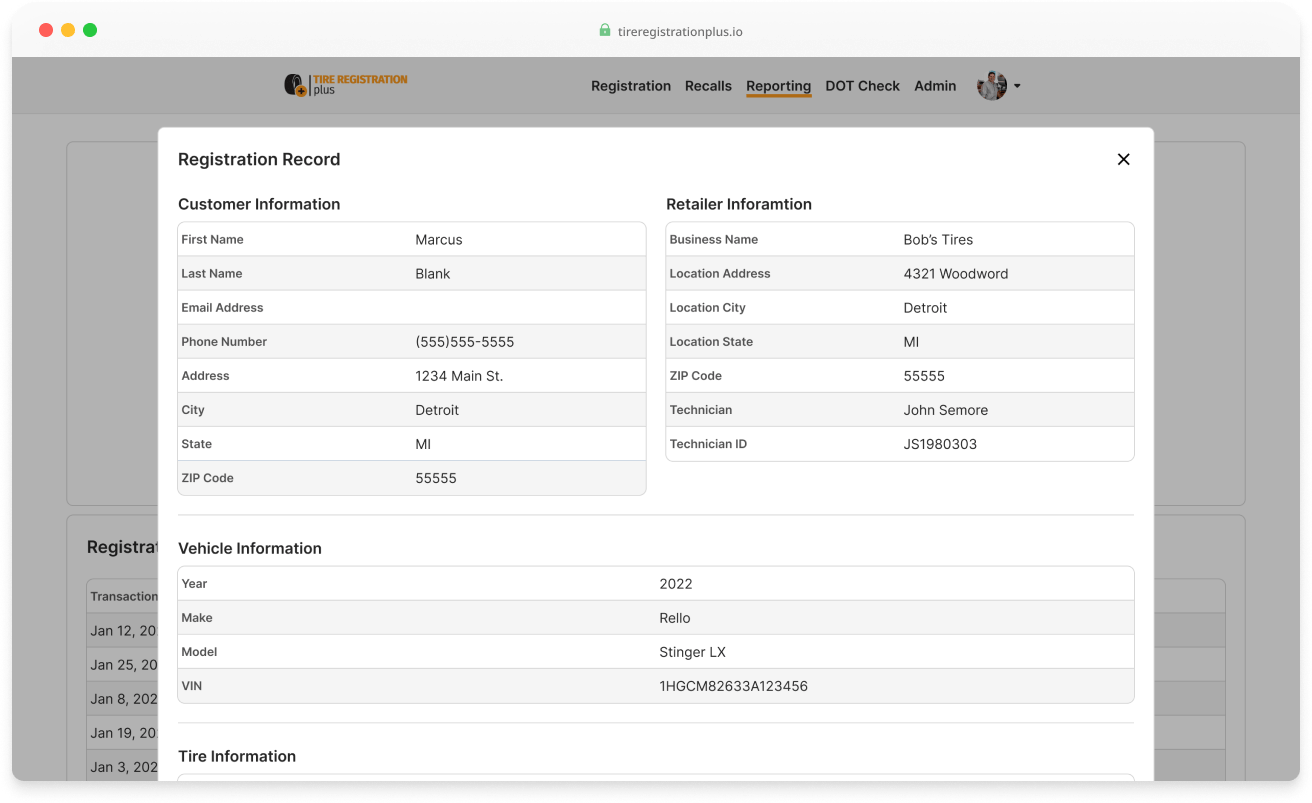
Tech: Partner SDK/REST hooks; secure payload with audit trail.
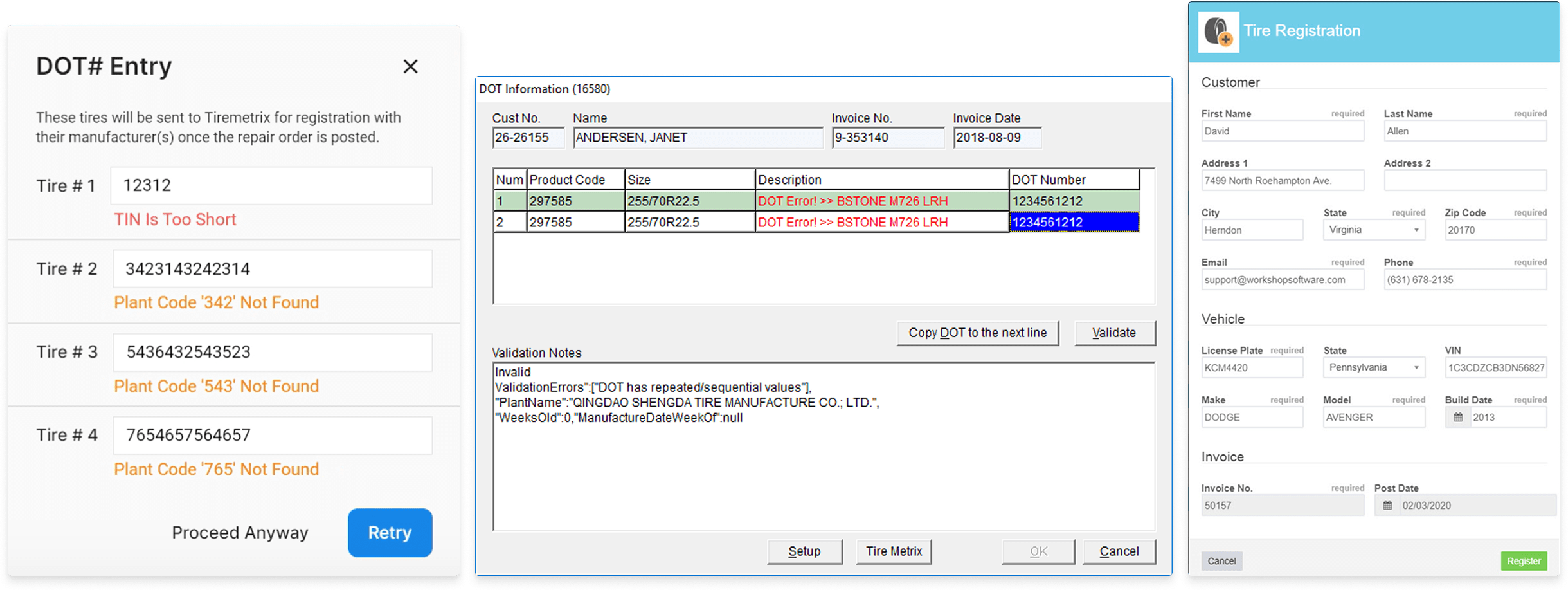
Tech: Validation API used by web + POS; ruleset versioning.
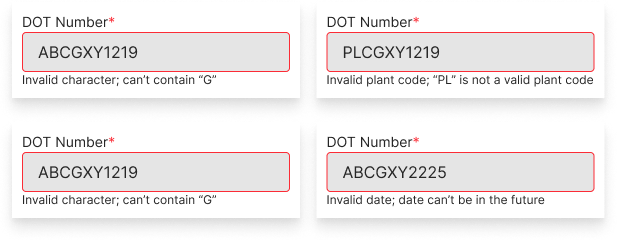
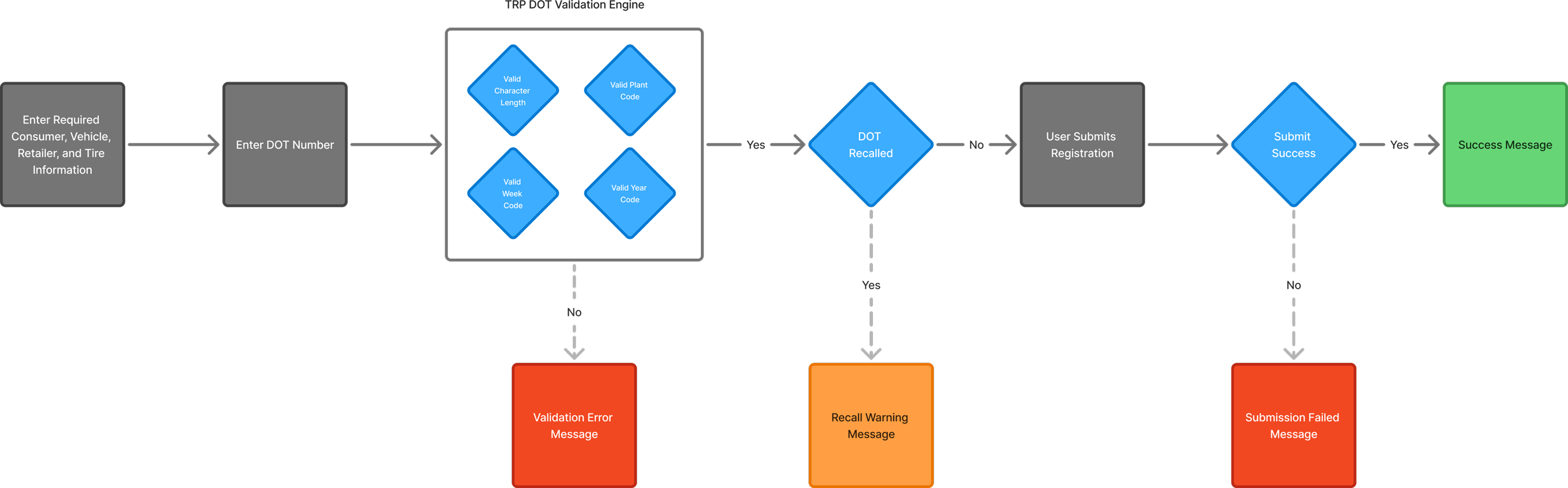
Tech: Recall Check API; notifications & exports for outreach.
All-brand electronic registration platform.
POS & shop management partners integrated.
Major dealer groups adopted, including Pep Boys & Belle Tire.
Validation reduced DOT entry mistakes and rework.























“Tiremetrix created an easy to use registration platform that delivers real benefits for my business and customers. Now, every tire is checked for accuracy, age, and recall status before the customer leaves the shop.”
“When we entered the DOT number in Tire Registration Plus it alerted us that the tire was subject to recall. We were able to contact the customer immediately. Made us look great!”
Tire Registration Plus didn’t start from a blank slate. The idea surfaced during user research on other Tiremetrix products, where conversations with technicians and shop managers revealed the pain of tire registration. It was a reminder that some of the most impactful product ideas come directly from watching how people work.
Over time we realized the standalone web app was useful, but the real growth came from pivoting to POS integrations. By meeting shops where their data already lived, we gained adoption across dozens of partners and large dealer groups. Looking back, the UI design was only a small piece of the work. The bigger challenge was in systems thinking, partnerships, validation logic, and compliance workflows.
Not every ambition was realized. I wish we had made more progress with OCR-based DOT capture, which could have reduced errors even further. We also explored using big data and early machine learning to map DOT patterns to tire models and even predict values without manual entry. Those experiments were ahead of their time and foreshadowed capabilities that are now becoming mainstream.
In the end, TRP taught me the value of zooming out beyond screens. The real design challenge was in the ecosystem, where aligning regulations, data standards, integrations, and business incentives created lasting impact.